Fed’s September meeting: what changes for savers?
Fed's September meeting could affect savings rates. Learn what savers should know about APYs, HYSAs, CDs and the Fed's rate decision.
What the Fed’s September Meeting Means for Savers
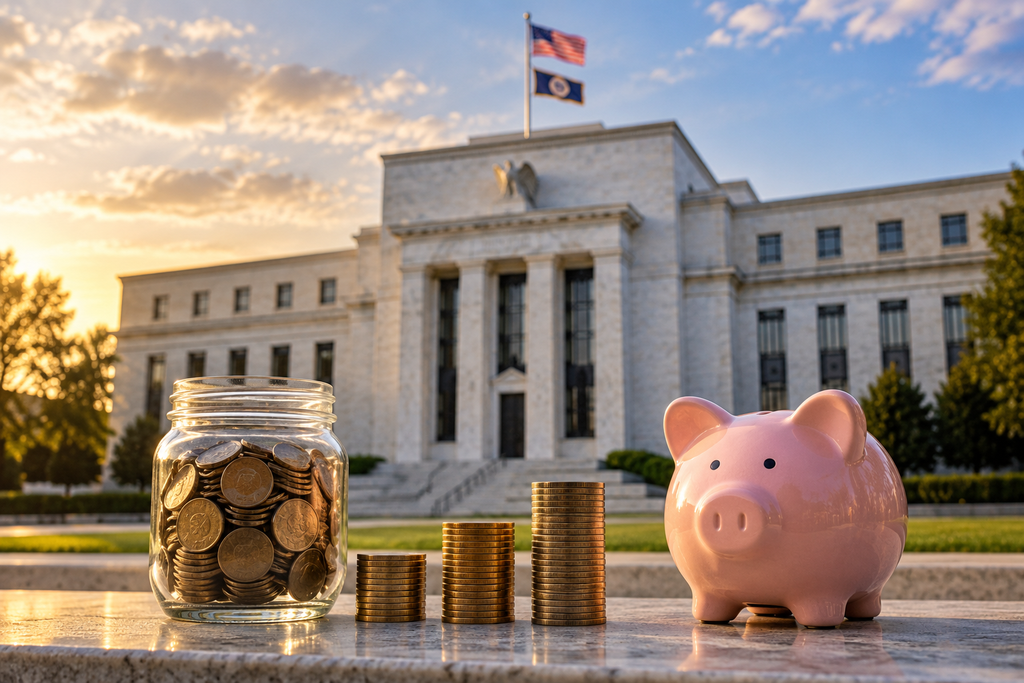
The Fed’s September meeting could affect how much interest you earn on your savings.
The Federal Open Market Committee (FOMC) is scheduled to meet on September 15–16, 2026, with its rate decision and press conference on September 16.
The federal funds target range is currently 3.50% to 3.75%. The Fed left rates unchanged at its July meeting, while three FOMC members preferred a 25-basis-point increase.
For savers, the most important question isn’t simply whether the Fed raises, cuts or holds rates.
It’s what happens to your savings APY and whether your money is still earning a competitive return.
What does the Fed’s September meeting mean for savers?
The Fed’s September meeting matters because its interest-rate decision can influence savings account APYs, money market rates and CD yields.
However, the Fed does not directly set the APY on your savings account. Banks and credit unions determine the rates they pay depositors.
The connection works like this: fed decision; short-term interest rates; bank funding costs; deposit rates; your APY
The effect isn’t necessarily immediate or identical across banks.
Will savings account rates change after the Fed meeting?
They might, but not necessarily by the same amount as the Fed’s rate decision.
Some banks adjust deposit rates quickly. Others move more slowly or may not pass the entire change on to customers.
That’s why your actual APY matters more than the Fed headline.
What is the Fed’s current interest rate?
As of September 2026, the federal funds target range is 3.50% to 3.75%.
The FOMC maintained that range at its July 29 meeting. The committee said economic activity had continued to expand at a solid pace, while inflation remained elevated relative to its 2% longer-run goal.
Three members dissented, preferring a 25-basis-point increase.
That matters because it shows that the direction of rates remains an active debate within the Federal Reserve.
When is the Fed’s September meeting?
The Fed’s September meeting is scheduled for September 15–16, 2026.
The FOMC statement and the Federal Reserve’s press conference are scheduled for September 16.
For savers, the press conference can be almost as important as the rate decision because it can provide clues about the Fed’s thinking on future meetings.
What happens to savings if the Fed cuts rates?
A Fed rate cut generally puts downward pressure on savings account APYs.
But that does not mean your savings rate will automatically fall by the same amount.
For example, if the Fed cuts rates by 0.25 percentage points, your bank could:
- Lower your APY by 0.25 percentage points
- Lower it by less
- Lower it by more
- Leave it unchanged for a period of time
The outcome depends on the bank, market conditions and competition for deposits.
Should you lock in a CD before a possible rate cut?
A CD can make sense if you want to lock in a fixed rate and won’t need the money during the term.
This is particularly relevant when savers expect interest rates to decline.
But there is a trade-off. Savings account = more flexibility
CD = more rate certainty Don’t lock away emergency savings simply because you expect the Fed to cut rates.
What happens to savings if the Fed raises rates?
A Fed rate increase can create upward pressure on savings rates.
Banks competing for deposits may raise APYs, particularly on high-yield savings accounts and money market accounts.
But again, there is no guarantee that your bank will pass along the full increase.
That’s why savers should compare the APY they actually receive with competitive rates in the market.
What should you do before the Fed’s September meeting?
You don’t need to predict the Fed. You need to know what your money is earning today.
Before September 16, take five minutes to review your savings account.
1. Check your current APY
Don’t rely on the rate you remember from when you opened the account.
Check the APY shown in your account today.
Savings rates are variable and can change over time.
2. Compare your rate with competitive HYSAs
If your bank is paying close to the national average, compare it with current high-yield savings accounts.
A difference of several percentage points can translate into hundreds of dollars in additional interest on larger balances.
3. Decide how much liquidity you need
Ask yourself: Will I need this money within the next few months?
If yes, a liquid savings account may be more appropriate.
If no, consider whether a CD or another short-term option offers a better fit.
4. Check whether your account is insured
For bank deposits, check for FDIC insurance. For eligible credit unions, check for NCUA insurance.
Don’t sacrifice deposit safety simply to earn a slightly higher APY.
What economic data will influence the Fed in September?
The Fed’s September decision comes after several important economic releases.
The Bureau of Labor Statistics scheduled:
- August PPI: September 10
- August CPI: September 11
- August Employment Situation: September 4
The CPI report is particularly relevant because it arrives only days before the FOMC meeting.
The Fed’s inflation goal is 2% over the longer run.
That means inflation data will remain an important factor when policymakers evaluate whether monetary policy is restrictive enough.
Why should savers care about CPI?
Because inflation determines what your savings can actually buy.
A 4% APY sounds attractive.
But if inflation is running at a similar or higher level, your purchasing power may not be growing as quickly as the account balance suggests.
For savers, the goal isn’t simply to find the highest APY.
It’s to preserve and grow purchasing power while keeping the money safe and accessible.
Fed’s September meeting: What should savers watch?
There are three things to watch when the Fed releases its decision.
H3: 1. The rate decision
Will the FOMC:
- Raise rates?
- Hold rates?
- Cut rates?
This is the headline, but it isn’t the entire story.
2. The Fed’s economic projections
The September meeting is accompanied by updated economic projections.
These projections can provide additional context about where policymakers see inflation, employment and interest rates heading.
3. The press conference
Fed Chair Jerome Powell’s comments can influence expectations about future monetary policy.
For savers, this matters because today’s Fed decision can affect tomorrow’s savings rates.
Author’s Opinion
The Fed’s September meeting is worth watching, but I wouldn’t build your savings strategy around guessing what Jerome Powell will say on September 16.
For most savers, the more immediate question is much simpler:
What APY is your money earning right now?
If you’re earning close to the national average while competitive accounts are offering around 4%, there may already be a meaningful opportunity to improve your return.
You don’t need to predict the Fed.
You don’t need to constantly move your money.
And you don’t need to chase every account offering an extra fraction of a percentage point.
Instead, check your APY, protect your emergency fund, compare legitimate alternatives and choose the account that matches when you’ll need the money.

Recommended Content
What happens to your money when inflation reaches
Learn how 3% inflation affects your budget and discover practical ways to manage rising prices.
Continue reading * You will remain on the current website What happens to your money when inflation reaches
Continue reading You will remain on the current website